



 Back to Insights
Opportunities Lost: Why Great Places Need Vision Before Infrastructure
Some of the greatest opportunities in property development are lost long before the first sod is turned, in the early planning conversations where feasibility models, engineering efficiencies and short-term financial outcomes quietly outweigh vision, innovation and a genuine understanding of what makes people connect emotionally with a place.
After nearly five decades working alongside some of Australia’s leading urban developers, I’ve seen this pattern repeat often enough to know it isn’t an accident, it’s a structural bias in how projects get built.
Why vision must come before infrastructure
This focus on infrastructure is understandable. Many project leaders come from engineering, construction and development backgrounds, where the majority of early investment is committed to transforming raw land into something deliverable with earthworks, site preparation, roads, drainage, power, water and civil services, long before a single block is sold.
These elements are critical, but they’re also the elements every developer must deliver. The real competitive advantage is rarely created through infrastructure itself, because competing developments generally face similar requirements, regulations and construction costs. The greatest opportunity for differentiation is found in the thinking that sits above the infrastructure. The vision, the urban planning, the customer journey, the landscape experience, the storytelling, and the ability to create an address people genuinely aspire to be part of. This is where strategic property marketing and place visioning become powerful contributors to long-term project value.
The hidden cost of a “logical” first stage
One of the most common opportunities overlooked is the importance of the first impression. The first stage of a development is often chosen because it’s the most logical construction sequence e.g. services connected, access available, civil works able to progress efficiently. That makes sense from a delivery perspective, but it doesn’t always consider the emotional journey of the customer and the critical first moments when perceptions are formed.
In my experience, this is where many otherwise well-conceived projects fall short. They start in the “right” place operationally, but the wrong place emotionally.
What luxury hotels can teach property developers
Luxury hotels have understood this principle for generations. They invest heavily in arrival experiences, landscaping, architecture, lighting and lobby spaces, because those first moments shape how people perceive everything that follows. Beyond that initial experience, the differences between one quality hotel and another become far less obvious.
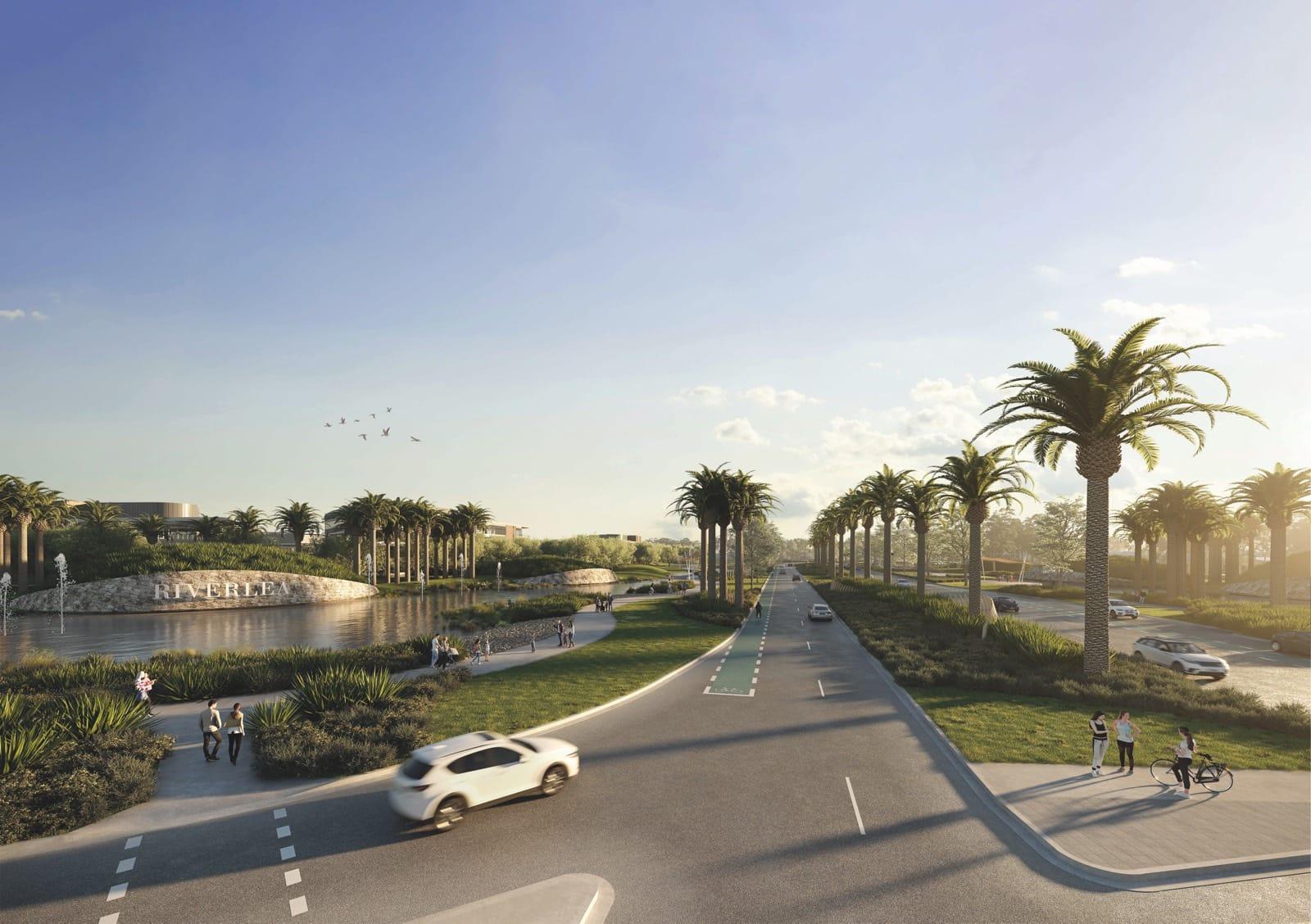
Property development follows the same human behaviour. You have one opportunity to create a memorable first impression, establish confidence, and let people imagine themselves belonging to the future you’re creating. The best masterplanned communities invest in a genuine sense of arrival, with distinctive entry statements, landscaped boulevards and considered journeys that lead people toward an engaging sales environment and display village. Done well, a display village becomes far more than a collection of homes; it becomes a living expression of the future community. People don’t simply buy land. They buy into a future.
Place visioning: aligning every discipline around the same future
One of the most valuable outcomes of early place visioning is that it brings every discipline involved in creating that future onto the same page. Urban planners, architects, landscape architects, engineers, designers, builders and marketers each bring enormous expertise, but naturally view a project through their own professional lens. The opportunity is to align these perspectives around a single vision that guides decision-making from the earliest stages through to delivery.
That shared vision becomes increasingly important as projects evolve, budgets are challenged and inevitable compromises need to be made. It creates a framework that helps every team member measure decisions against the same objective: are we protecting and enhancing the place we originally set out to create? This is particularly important for large-scale greenfield communities, where the challenge isn’t simply creating another subdivision but establishing a genuine destination with its own character, identity and sense of belonging.
Great places are intentionally created
The most successful communities continue to evolve beyond the first release of land, investing in the ingredients that form the social fabric of a place. Parks, open spaces, sporting facilities, schools, community hubs, retail villages, restaurants, and places where people naturally gather and connect. The larger the development, the greater the opportunity and responsibility to keep innovating, because strong communities don’t happen by accident. They’re intentionally created through hundreds of decisions that either reinforce or weaken the original vision.
After five decades working in property marketing, brand strategy and place creation, the most important lesson I’ve learned is that successful developments are rarely defined only by what’s built. Infrastructure creates the foundation, but vision creates the value. Ultimately, people don’t fall in love with roads, services and engineering solutions. They fall in love with places that make them feel they belong.